Real Estate Investing with Bad Credit
Real estate investing with bad credit may be more possible than you think.
A low credit score can certainly make conventional financing more difficult. Banks use credit history to help determine whether they will lend money, how much they will lend, and what interest rate they will charge.
But here’s the important distinction:
Getting a conventional mortgage and becoming a real estate investor are not necessarily the same thing.
If your only plan is to walk into a bank, qualify for a large mortgage, and buy an investment property, poor credit can be a serious obstacle.
Real estate, however, offers more than one way to participate.
The first step is understanding what you bring to a deal besides your credit score.
Your Credit Score Is Only One Resource
Most beginning investors naturally think about money and credit first.
That’s understandable. Properties are expensive, and lenders want evidence that borrowers will repay them.
However, successful real estate transactions involve other resources too.
Knowledge has value. So does the ability to recognize an overlooked property. Finding a motivated seller can create value. Understanding the numbers matters. Bringing an attractive opportunity to someone with investment capital can also be valuable.
None of those things requires a 750 credit score.
That’s why real estate investing with bad credit should begin with a broader question:
What can I bring to a real estate transaction?
The answer may be more than you realize.
Real Estate Investing With Bad Credit Starts With Creating Value
Suppose you don’t have the credit necessary to finance an investment property yourself.
Someone else does.
There are investors with excellent credit and substantial capital who face a completely different problem: they need good deals, people who can find properties, information, and opportunities that make financial sense.
If you learn how to locate potential deals, research properties, understand seller situations, and evaluate the basic numbers, you can begin developing something experienced investors value.
Instead of starting with: “Who will lend me the money?” you can start with: “Can I find an opportunity worth bringing to someone who already has the money?”
That changes the equation considerably.
Real Estate Investing With Bad Credit Requires Knowledge
Bad credit doesn’t make a bad deal good.
Neither does good credit.
Before worrying about financing, learn how to determine whether a potential investment deserves further investigation.
What are comparable properties selling for?
How much work does the property need?
What could the repairs cost?
Why does the owner want to sell?
How quickly does the seller need to act?
What expenses could be involved in buying, holding, repairing, and eventually selling or renting the property?
Most importantly, is there enough potential value in the transaction to justify the risk?
These are questions you can learn to ask without applying for a loan or spending thousands of dollars.
Roman Didn’t Start With Good Credit
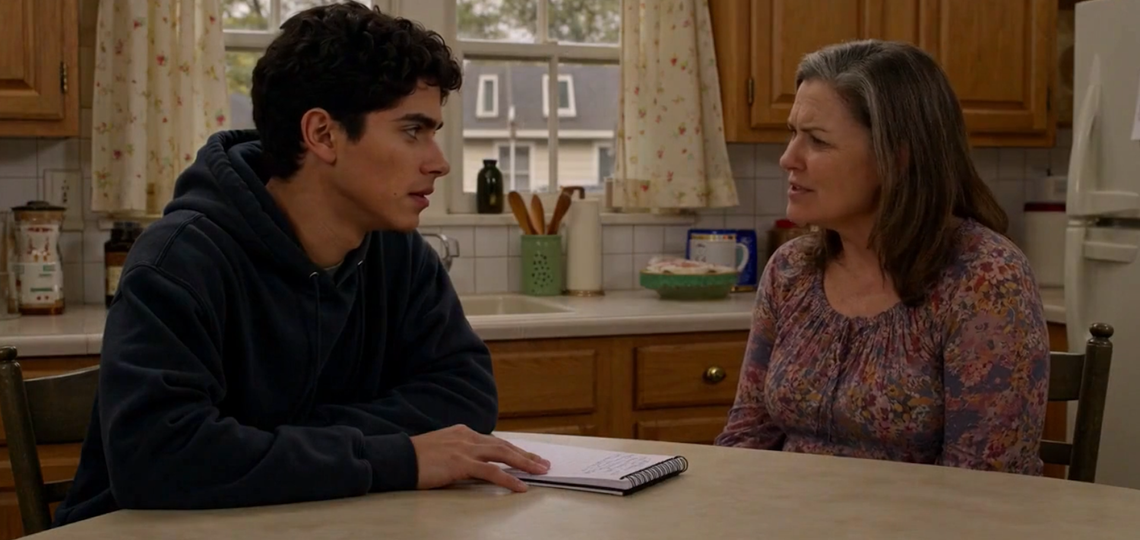
When Roman became interested in real estate, he was only 18.
He didn’t have years of established credit history. Nor did he have a pile of money waiting to be invested.
So he began with what was available to him.
Roman drove through older neighborhoods looking for vacant, neglected, or distressed properties. He recorded what he found and learned to investigate potential opportunities.
Next, he learned to talk with property owners.
Instead of concentrating entirely on the house, Roman listened to the seller.
Why did the owner want to sell?
What problem was the property creating?
Could a transaction solve that problem?
Those conversations taught him something that a credit report never could:
Real estate deals are ultimately made between people.
The Seller May Care About More Than Your Credit
A conventional lender is understandably interested in your credit score.
A property owner may have very different concerns.
Perhaps speed matters. Another seller might want simplicity. Someone with an unwanted property could be tired of repairs, taxes, tenants, or maintenance. An inherited property may be more burden than asset to its new owner.
That doesn’t mean every motivated seller will accept an unconventional transaction.
It does mean that understanding what the seller needs can reveal possibilities that aren’t apparent when you look only at the asking price.
Good investors don’t begin by trying to talk sellers into something.
They begin by listening.
Real Estate Investing With Bad Credit May Require Creativity
There are many ways real estate transactions can be structured.
Depending on the property, seller, investor, jurisdiction, and circumstances, possibilities might include partnerships, private financing, seller financing, assignments, options, or other arrangements.
Each comes with its own financial and legal considerations. Some strategies may require licenses or disclosures, and laws vary by state. Professional legal, tax, lending, or real estate advice may be appropriate before entering a transaction.
The lesson isn’t that there is a loophole around bad credit.
It’s much simpler:
Don’t assume conventional bank financing is the only possible doorway into real estate.
First find out whether there’s a genuine opportunity.
Then determine whether there’s a legitimate way to structure it.
A Partner Can Bring What You Don’t Have
Consider two people.
One has money and excellent credit but little time to search for investment properties.
The other has limited capital and poor credit but spends months learning a market, developing relationships, finding potential opportunities, and becoming skilled at evaluating deals.
Could those two people potentially have something to offer each other?
Of course.
Partnerships aren’t automatically the answer, and choosing the wrong partner can create serious problems. Responsibilities, ownership, risks, profits, and exit arrangements should be clearly understood and properly documented.
Nevertheless, the principle is important.
You don’t necessarily have to personally possess every resource a transaction requires.
Sometimes your job is to bring a different resource to the table.
Don’t Let Bad Credit Become an Excuse
There’s another danger in assuming that your credit has locked you out.
It can become a reason to do nothing.
You might tell yourself you’ll study real estate after your credit improves. Then a year passes. Perhaps two years pass.
Why wait to learn?
Study your local market now.
Follow property sales.
Learn how investors calculate potential profits.
Understand repair costs.
Meet people involved in real estate.
Watch what experienced investors do.
At the same time, work on improving your financial position and credit when possible.
Those two activities can happen together.
Real estate investing with bad credit doesn’t mean ignoring your credit. It means you don’t have to postpone your education while you improve it.
Good Credit Is Still Worth Having
None of this means credit is unimportant.
Good credit can create additional financing choices, potentially improve borrowing terms, and make certain transactions much easier.
If your credit needs work, improving it is worthwhile.
Paying obligations on time, reducing excessive debt, checking credit reports for errors, and developing responsible financial habits can strengthen your position over time.
Meanwhile, you can be developing another asset:
your knowledge of real estate.
Imagine improving both simultaneously.
A year from now, your credit could be stronger—and you could know considerably more about finding and evaluating real estate opportunities.
That’s much better than simply waiting.
Real Estate Investing With Bad Credit Starts With Seeing Differently
This is one of the central ideas behind Roman’s story.
Most people see a house and immediately think about whether they can afford it.
Roman learned to look at the situation differently.
Is there an opportunity here?
What does the seller need?
Do the numbers work?
Who might be interested in this deal?
Only after answering questions like those does financing become relevant.
That shift—from concentrating entirely on your limitations to concentrating on the opportunity—is part of learning to think like an investor.
Your Credit Score Doesn’t Have to Be Your Starting Line
If you want to become a real estate investor, don’t wait for everything to be perfect.
You may eventually need better credit. You may need capital. You’ll certainly need knowledge, judgment, patience, and a willingness to walk away when the numbers don’t make sense.
But you can begin developing those things today.
Real estate investing with bad credit isn’t about pretending your credit doesn’t matter.
It’s about recognizing that your credit score is only one part of a much larger picture.
Learn the business.
Study properties.
Understand sellers.
Run the numbers.
Develop relationships.
Learn to recognize opportunities.
Then, when you encounter something promising, you’ll be in a much better position to ask the question that matters:
“How could this deal be put together?”
Want to Learn How Roman Got Started?
Roman began learning real estate at 18 without the money, credit, or experience most people assume they need.
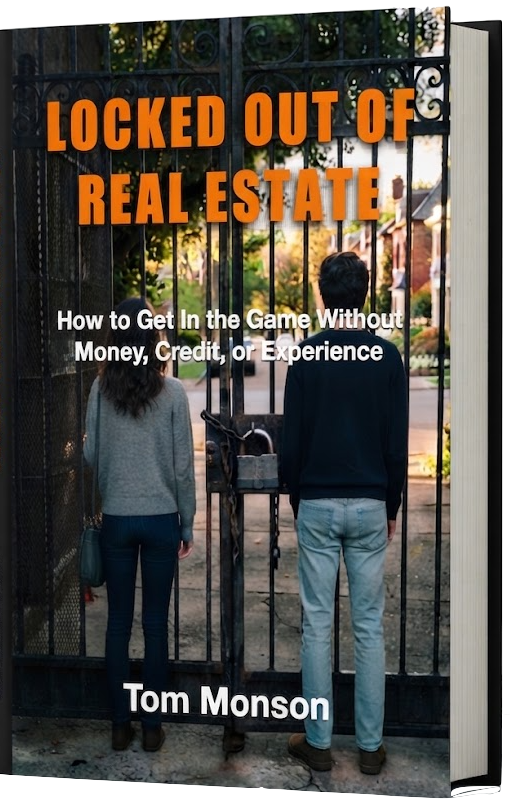
In Locked Out of Real Estate, I tell his story and explore how aspiring investors can learn to recognize opportunities, understand sellers, evaluate potential deals, and think creatively about putting transactions together.
If you’ve been telling yourself that your credit score means real estate isn’t for you, perhaps it’s time to look at the question differently.
You may not be as locked out as you think.
Now Available on AMAZON

Related article: Become a Real Estate Investor