Finding Motivated Sellers
Finding motivated sellers begins with understanding one simple truth: a house doesn’t become motivated. A person does.
That distinction can change the way you look at real estate.
A property may be vacant, neglected, inherited, rented, or in need of major repairs. Those things can suggest an opportunity, but they don’t tell you whether the owner wants to sell.
On the other hand, a beautiful, well-maintained house may belong to someone who has a very good reason to make a deal.
That’s why successful real estate investing isn’t only about properties.
It’s about people.
Finding Motivated Sellers Starts With Asking Why
Imagine that someone tells you, “I want to sell my house.”
The obvious question might be: “How much do you want?”
But there’s another question that may be even more important: “Why do you want to sell?”
The answer can tell you far more than the asking price.
Perhaps the owner is moving. Maybe the property was inherited. A landlord could be tired of managing tenants. Someone may be facing expensive repairs and doesn’t want to make them.
Another owner might simply have reached the point where getting rid of the property matters more than squeezing every possible dollar out of it.
Until you know why someone wants to sell, you don’t really understand the opportunity.
A Motivated Seller Isn’t Necessarily Desperate
The term “motivated seller” can create the wrong picture.
It may sound like someone in financial trouble who has to sell immediately.
Sometimes that’s the case.
Often, it isn’t.
A motivated seller can simply be someone whose circumstances make selling attractive.
Perhaps an owner has moved across the country and no longer wants to manage a property from 2,000 miles away. Someone else might have inherited a house along with siblings who would rather have cash.
Another person may own a rental property that has become more trouble than it’s worth.
Motivation can come from inconvenience as easily as financial pressure.
That matters because finding motivated sellers isn’t about hunting for desperate people.
It’s about finding people for whom a real estate transaction may solve a genuine problem.
Finding Motivated Sellers Means Learning to Listen
When Roman began talking with property owners, he learned something that couldn’t be discovered by looking at a house from the street.
The owner had a story.
Roman needed to hear it.
Why was the owner considering selling?
How quickly did he or she want something to happen?
What had prevented the property from being sold already?
Were repairs an issue?
Was certainty more important than getting the highest possible price?
Roman wasn’t simply collecting information about houses.
He was learning about people.
That’s an important difference.
If you’re so busy thinking about the deal you want to make that you don’t hear what the owner is telling you, you may miss the deal entirely.
What Does the Seller Really Want?
The obvious answer is money.
Of course price matters.
But price isn’t always the only consideration in a real estate transaction.
One seller may want speed.
Another may value certainty.
Someone else might want to avoid making repairs, cleaning out a property, dealing with tenants, or spending months preparing a house for sale.
An owner could want flexibility about when to move.
The important point isn’t that sellers don’t care about money.
It’s that different sellers care about different things.
Finding out what matters requires conversation.
And sometimes the answer will surprise you.
Price Is Only One Part of a Deal
Suppose two buyers approach the same seller.
One offers a higher price but needs financing, inspections, repairs, and a lengthy closing period.
The other offers less but can provide terms that better fit what the seller needs.
Which offer is better?
There isn’t enough information to know.
That’s the point.
People sometimes look at real estate as though every transaction comes down to one number.
It doesn’t.
Price, timing, financing, repairs, certainty, convenience, closing costs, possession, and other terms can all affect a transaction.
That doesn’t mean you can make a poor offer attractive by dressing it up with creative terms.
It means a good deal starts by understanding what each party values.
Finding Motivated Sellers Isn’t About Talking People Into Selling
This may be one of the most important distinctions for a beginning investor.
Your job isn’t to convince someone who doesn’t want to sell that he should.
If an owner loves the property, doesn’t need to sell, and has no interest in your proposal, you probably don’t have a motivated seller.
Move on.
There are millions of properties.
The better approach is to look for circumstances in which selling already makes sense to the owner.
Then listen.
Can you offer something that helps?
If the answer is yes, there may be a basis for a transaction.
If the answer is no, there may not be.
A deal should solve problems, not create new ones.
Where Might You Find Motivated Sellers?
There is no single source.
Some possibilities become visible simply by paying attention to properties and neighborhoods.
A vacant house may lead you to an owner who has moved away. A neglected rental could belong to a tired landlord. An inherited property may have owners who live in another state.
Properties that have remained unsold can also be worth studying.
Beyond that, people can be valuable sources of information.
Real estate agents, property managers, contractors, attorneys, accountants, landlords, neighbors, and other people involved in a community may encounter owners whose circumstances are changing.
The goal isn’t to pry into someone’s personal life.
It’s to become aware of legitimate situations where an owner may already be considering a sale.
Finding Motivated Sellers Can Begin With a Property
This is where Article #3’s lesson becomes useful.
You notice something other people drive past.
Perhaps it’s an overgrown yard.
Maybe the house appears vacant.
Something about the property makes you curious.
That’s the beginning—not the conclusion.
Next comes research.
Who owns it?
Is the property actually vacant?
Is it listed?
Has it been listed before?
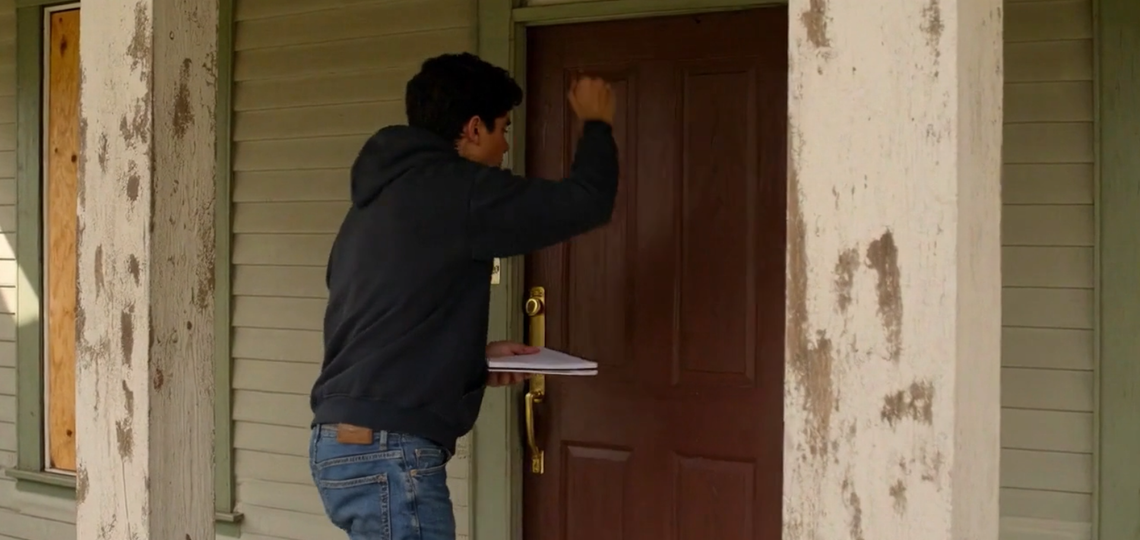
Then, where appropriate, comes contact.
Only the owner can tell you whether there’s any interest in selling.
Finding the property may get you to the door. Understanding the seller may get you to the deal.
Ask Questions Before You Offer Solutions
There’s a natural temptation when you think you’ve found an opportunity.
You want to start explaining what you can do.
Resist that temptation.
First, understand the situation.
You might ask why the owner is considering selling, what he or she would ideally like to happen, whether there is a preferred timeline, or whether anything about the property has made selling difficult.
Then listen to the answers.
You may discover that your original idea doesn’t fit the seller’s needs at all.
That’s useful information.
Or you may discover something you hadn’t considered.
The purpose of asking questions isn’t to manipulate the seller. It’s to understand whether there is a transaction that makes sense for both sides.
Motivation Doesn’t Automatically Mean a Good Deal
Here’s another important warning.
You can find an extremely motivated seller and still find a terrible investment.
Suppose an owner wants to sell immediately.
That sounds promising.
But what if the property needs $150,000 in repairs?
What if the asking price leaves no reasonable margin?
What if there are title problems or other complications?
Seller motivation doesn’t erase mathematics.
You still need to understand the property’s value, repairs, expenses, risks, and potential return.
Roman learned to separate these two questions: Is the seller motivated? Do the numbers work?
You need satisfactory answers to both.
Finding Motivated Sellers Requires Patience
Most conversations won’t become deals.
That’s normal.
An owner may be curious but not serious. Another may want far more than the property appears to justify. Someone else might decide not to sell at all.
Don’t force it.
Real estate investing is partly a numbers game.
The more appropriate properties you investigate and the more owners you speak with, the better you’ll become at recognizing the difference between casual interest and genuine motivation.
You’ll also become a better listener.
Over time, you may begin recognizing signals that weren’t obvious when you started.
That’s experience.
And you can begin developing it long before you ever purchase an investment property.
Sometimes the Best Thing You Can Say Is No
Beginning investors naturally want their first opportunity to become a deal.
That can be dangerous.
You may have spent hours finding a property, researching it, locating the owner, and having conversations.
Then you discover that the numbers don’t work.
Walk away.
Perhaps the seller wants a price that makes no sense for you. Maybe the repairs are too extensive. The risk could simply be greater than you’re comfortable accepting.
Whatever the reason, don’t turn a bad transaction into a good one in your imagination because you want it to work.
The ability to say no is part of becoming an investor.
There will be another property.
There will be another seller.
What Roman Was Really Looking For
When Roman drove those neighborhoods at 18, it looked as though he was searching for houses.
In a way, he was.
But the houses were clues.
Behind each property was an owner, and behind each owner was a different set of circumstances.
Most led nowhere.
Some were worth investigating.
A few contained the ingredients of a deal.
Roman’s job was to learn the difference. He didn’t have a lot of money, established credit, or years of experience.
So he developed something he could acquire without any of those things: the ability to recognize opportunity.
Finding motivated sellers became part of that education.
The Seller Is Part of the Opportunity
A beginning investor may look at a property and ask: “How cheap can I buy this house?”
A better question may be: “Is there a way to create a transaction that works for the seller and still makes financial sense for me?”
Those aren’t the same question.
One begins with what you want.
The other begins with understanding the situation.
That doesn’t mean sacrificing your own interests. A transaction still has to work financially, legally, and practically.
But when both sides have a reason to say yes, you may have the foundation of a real deal.
That’s one of the lessons Roman learned by getting out of the car and talking to people.
Want to Learn How Roman Got Started?
Roman began learning real estate at 18 without the resources most people assume they need.
He looked for overlooked properties, investigated potential opportunities, talked with owners, learned what sellers needed, and ran the numbers before deciding whether a deal made sense.
In Locked Out of Real Estate, I tell his story and explore how aspiring investors can begin developing those same skills.
You don’t need to own a property today to start learning how real estate works.
You can start by learning to see opportunities—and understanding the people behind them.
Finding the property gets you to the door. Understanding the seller may get you to the deal.
The Bottom Line: Finding Motivated Sellers Starts With Learning to Listen

Now Available on AMAZON

Related articles:
Real Estate Investing Without Money