Finding Overlooked Properties
Finding overlooked properties begins with learning to see what other people drive past.
When Roman became interested in real estate at 18, he didn’t have money, established credit, or experience.
What he did have was a car, a notebook, and the willingness to look.
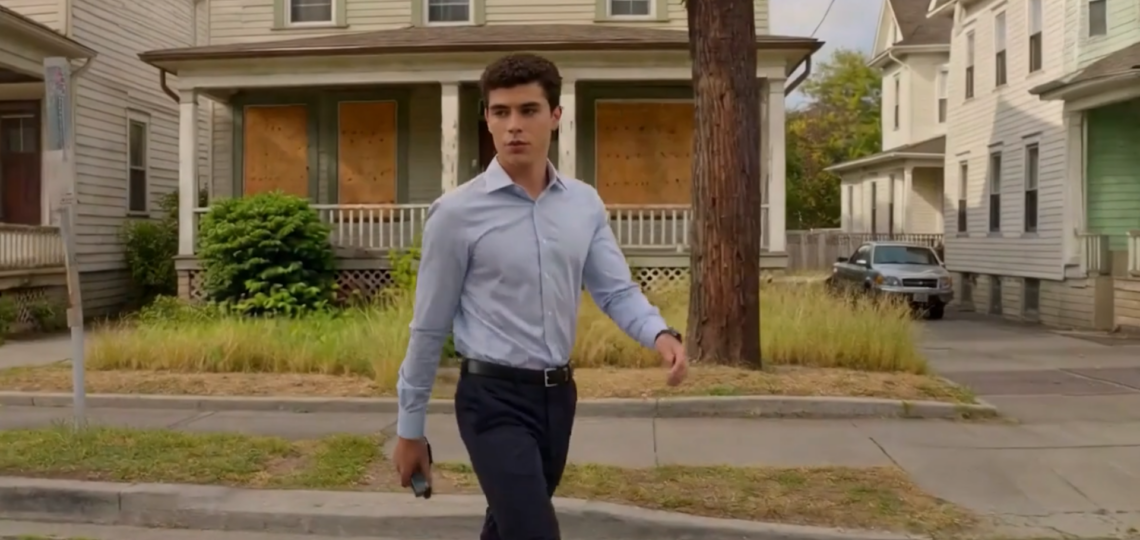
He drove through older neighborhoods searching for properties that seemed out of place. An overgrown yard might catch his attention. So might a vacant house, boarded windows, or obvious deferred maintenance.
At first, the goal was simple: find properties that might represent an opportunity.
But Roman eventually learned something more important.
Sometimes the opportunity isn’t obvious from the street.
Finding Overlooked Properties Starts With Learning to Look
Most people drive through a neighborhood without really seeing it.
They notice the attractive houses, perhaps admire a remodeled property, and keep driving.
An investor learns to look differently.
Why hasn’t that lawn been cut? Why are newspapers accumulating? Why does one house appear vacant when everything around it is occupied? Why has a property remained neglected while the surrounding neighborhood has improved?
None of these things proves that a property is for sale.
They are simply clues.
The objective isn’t to jump to conclusions. It’s to become curious enough to investigate.
That is one of the first skills Roman developed.
He wasn’t just looking at houses.
He was looking for situations.
What Does an Overlooked Property Look Like?
There is no single definition.
Some potential opportunities are obvious. Others barely stand out at all.
A property might have peeling paint, an overgrown yard, broken fencing, boarded windows, or visible damage. Another could appear vacant or simply look as though maintenance has been postponed for a long time.
Those are the properties almost anyone can spot.
But there are less obvious possibilities.
Perhaps a house has been sitting on the market longer than similar properties nearby. Maybe a rental property has become difficult for its owner to manage. An inherited house could be perfectly attractive but unwanted by the person who now owns it.
That’s why finding overlooked properties requires more than searching for the ugliest house on the block.
The appearance of the property is only the beginning.
The Property May Not Be the Real Problem
This is where real estate becomes interesting.
A house doesn’t become motivated.
A person does.
An owner may be dealing with a property that no longer fits his or her life.
Perhaps the owner moved away. Maybe repairs have become burdensome. A landlord could be tired of tenants and maintenance. Someone might inherit a house in another city and have no desire to keep it.
In situations like these, the building itself may be perfectly fine.
The potential opportunity exists because of the circumstances surrounding it.
That distinction matters.
If you concentrate entirely on distressed houses, you may miss motivated people.
And motivated people are often where interesting real estate conversations begin.
Finding Overlooked Properties Means Asking Questions
Seeing something unusual doesn’t automatically make it an investment opportunity.
You have to learn more.
Who owns the property?
Is it actually vacant?
Has it recently been listed for sale?
How long has the owner had it?
What are comparable properties selling for?
Does the property appear to need significant repairs?
Some information can be found through public records and legitimate real estate sources. Other information may only emerge through a conversation with the owner.
The goal isn’t to invade anyone’s privacy.
It’s to gather enough appropriate information to determine whether there’s a reason to continue investigating.
Finding overlooked properties is really an exercise in curiosity.
Notice something.
Ask a question.
Then see where the answer leads.
How Roman Learned About Finding Overlooked Properties
Roman learned that you can only discover so much by looking at a house.
Eventually, you need to understand the person behind it.
So he talked with property owners.
Those conversations weren’t simply about asking, “How much do you want for your house?”
Roman wanted to know what was happening.
Why was the owner interested in selling?
What problem was the property creating?
Was speed important?
Did the owner want simplicity?
Was there even a problem to solve?
Sometimes there wasn’t.
That’s important too.
Not every property is a deal, and not every owner wants your help.
A good investor needs to recognize both situations.
Don’t Fall in Love With an Ugly House
This may be one of the easiest mistakes for a beginning investor to make.
You find a terrible-looking property and immediately think:
This has to be a bargain.
Maybe.
Maybe not.
A neglected house can still be overpriced. Repairs may cost considerably more than expected. There could be structural problems, liens, title issues, zoning concerns, environmental problems, or other complications.
Even a highly motivated seller doesn’t automatically create a profitable transaction.
That’s why the numbers matter.
Before becoming excited about any property, you need to understand its potential value, likely repair costs, transaction expenses, holding costs, and other relevant risks.
Then ask the question that matters:
Is there enough room here for a deal to make sense?
If not, walk away.
Finding Overlooked Properties Is Only the Beginning
Discovering a possible opportunity can be exciting, but discovery isn’t the same as a deal.
Roman learned to run the numbers before moving forward.
What might the property realistically be worth, what repairs would probably be necessary, and what could go wrong?
Would an experienced investor with cash actually be interested in the opportunity?
If the numbers didn’t work, Roman moved on.
That last part is important.
Beginning investors sometimes become emotionally attached to the first opportunity they find. They want it to work because they invested time finding it.
Experienced investors understand that walking away is part of investing.
There will be other properties.
Protecting yourself from a bad deal is just as important as finding a good one.
Look Where Other People Aren’t Looking
You don’t necessarily need access to some secret list of properties.
Start by paying attention.
Drive through neighborhoods you know.
Notice properties that seem different from the ones around them.
Watch for homes that appear vacant or neglected. Follow properties that remain on the market. Learn about neighborhoods undergoing change.
Talk to people.
Real estate agents, contractors, property managers, landlords, attorneys, accountants, neighbors, and other local professionals may encounter property situations long before the average buyer ever hears about them.
Over time, you begin developing something valuable:
eyes for opportunity.
The houses were always there.
What changes is your ability to notice them.
Finding Overlooked Properties Can Start in Your Own Neighborhood
You don’t have to begin by driving a hundred miles looking for the perfect investment.
Start where you already understand the market.
What are houses selling for in your neighborhood?
Which properties sell immediately?
Which ones don’t?
What does a remodeled house sell for compared with one that needs considerable work?
How much difference does another bedroom, bathroom, garage, or larger lot make?
You can learn an enormous amount without buying anything.
Follow listings.
Watch sales.
Study price reductions.
Look at properties that disappear from the market and later return.
The objective is to develop your judgment before your money is at risk.
The more you understand a particular market, the easier it becomes to recognize when something doesn’t fit the usual pattern.
And sometimes, that’s where the opportunity is hiding.
The Best Opportunity May Not Look Distressed
Remember the distinction between the property and the person.
Imagine two houses.
One is badly neglected. The owner has no mortgage, doesn’t need money, loves the property, and has absolutely no intention of selling.
The second house is immaculate.
But its owner has already moved across the country, doesn’t want to become a long-distance landlord, and would like to simplify the situation.
Which one represents the better potential opportunity?
You don’t know yet.
You need more information.
That’s precisely the point.
Finding overlooked properties isn’t just about finding houses that look bad. It’s about recognizing circumstances other people may not notice.
That requires observation, research, listening, and judgment.
What Other People Drive Past
Think about Roman at 18. No big bankroll, no long credit history, and no years of real estate experience.
Just a young man driving through neighborhoods with a notebook on the passenger seat.
Thousands of other people probably drove past the same houses.
They saw an overgrown lawn.
Roman wondered why it was overgrown.
They saw an empty house.
Roman wondered who owned it.
They saw a problem.
Roman began learning to ask whether the problem might contain an opportunity.
That’s the shift.
Finding overlooked properties isn’t really about seeing something invisible.
It’s about learning to pay attention to things everyone else can see—and then asking questions they don’t ask.
Want to Learn How Roman Got Started?
Roman didn’t begin his real estate career by buying expensive properties.
He began by looking.
Then he learned to investigate what he found, talk with property owners, understand their situations, run the numbers, and determine whether there was a deal worth pursuing.
Those skills eventually changed the direction of his life.
In Locked Out of Real Estate, I tell Roman’s story and explore how aspiring investors can begin recognizing opportunities even if they don’t have the money, credit, or experience they assume real estate requires.
You don’t have to buy a property today.
You can start learning to see one.
The Bottom Line: Finding Overlooked Properties Starts With Learning to See

Now Available on AMAZON