Real Estate Investing Without Money
Real estate investing without money sounds impossible—until you understand what “without money” really means.
Properties cost money. Somebody ultimately has to pay for them.
But that doesn’t necessarily mean you need a lot of money to get started.
A lot of people never get that far: they look at the price of houses, the down payment a bank might require, and their savings account.
Then they conclude: “Maybe someday.”
But becoming a real estate investor doesn’t necessarily begin with buying a property.
It begins with learning how to recognize an opportunity.
The Question That Changes Everything: Real Estate Investing Without Money?
Most people look at a property and ask: “Can I afford to buy it?”
That’s certainly an important question. But an investor learns to ask a different one: “Is there a deal here, and how could I put it together?”
That’s a very different way of looking at real estate.
It shifts your attention away from what you don’t have and toward what is actually happening with the property and the people involved.
Why is the owner selling?
How much is the property worth?
Does it need repairs?
How much would those repairs cost?
Is there enough room between the cost of acquiring and improving the property and its potential value to create an opportunity?
Could someone else provide the money?
Could the seller’s particular circumstances create possibilities that aren’t obvious from the asking price?
Those are investor questions.
And you don’t need a large bank account to start learning how to ask them.
Start by Learning What to Look For
Roman was 18 when he became interested in making money in real estate.
He didn’t have much money. He didn’t have an established credit history. And he certainly didn’t have years of real estate experience. Someone told him that real estate investing without money was not only possible but also how many investors get started.
So he started with something he did have.
His eyes.
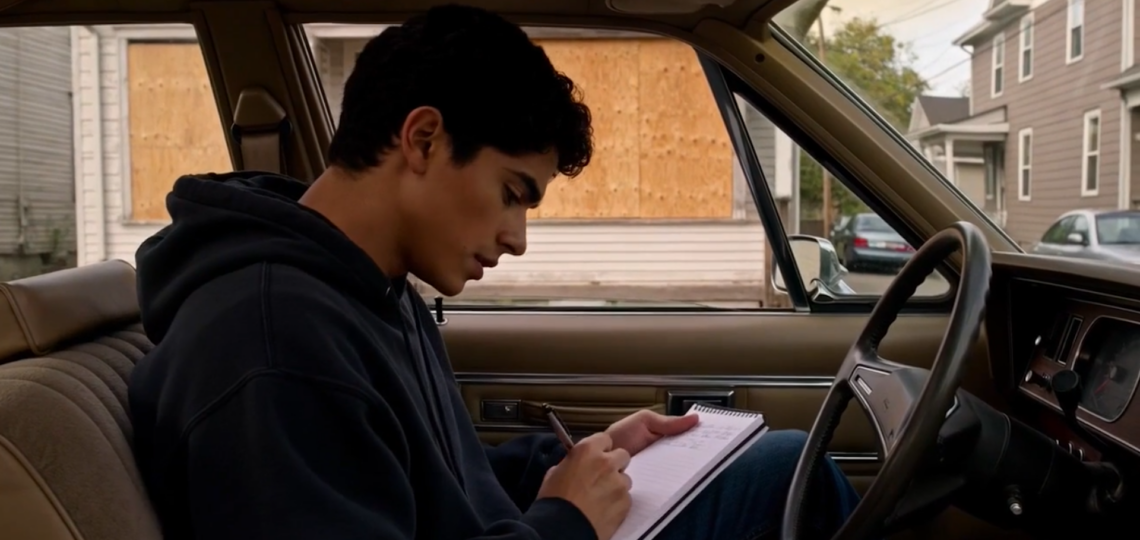
He drove through older neighborhoods looking for properties that other people might overlook.
Vacant houses.
Overgrown yards.
Boarded-up windows.
Properties that appeared neglected.
Signs of deferred maintenance.
He wrote down what he found.
None of those things automatically makes a property a good investment. But they can be clues that something is happening—and that is where an investor begins investigating.
Sometimes the Opportunity Isn’t the House
One of the most important things Roman learned was that real estate isn’t only about property.
Real Estate Investing Without Money is About People.
A property owner may need to sell because of a move, an inheritance, financial pressure, a divorce, an unwanted rental property, extensive repairs, or simply because owning the property has become a burden. Real estate investing without money is achievable when you focus on helping people solve their problems.
That doesn’t mean taking advantage of someone in difficulty.
Quite the opposite.
A good transaction has to solve a problem for the seller as well as create an opportunity for the investor.
Roman learned to talk with property owners and, more importantly, listen to them.
What did they need, what mattered, and what problem were they trying to solve?
Sometimes those answers mattered just as much as the house itself.
Learn the Numbers Before You Risk the Money
Finding an interesting property isn’t enough.
The numbers have to work.
Roman learned to estimate what a property was worth, what repairs might cost, and whether there was enough room in the transaction for an investor to make a reasonable profit.
And he learned another valuable lesson:
If the numbers didn’t work, walk away.
That’s an important distinction between investing and simply falling in love with a property.
You don’t have to make every deal work.
You have to learn to recognize the ones that might work.
What If You Don’t Have the Money?
This is where many prospective investors stop.
They find a potential opportunity and immediately think:
“But I can’t afford to buy it.”
Maybe you can’t.
That doesn’t necessarily mean there isn’t a deal.
Depending on the circumstances, real estate transactions can involve conventional financing, private investors, partners, seller financing, assignments, options, or other legitimate structures.
Each carries different risks, costs, legal requirements, and advantages. Some aren’t appropriate—or even available—in every situation or jurisdiction.
The point isn’t that there’s a magic way to buy houses without money.
There isn’t.
The point is that your own checking account isn’t necessarily the only resource involved in a real estate transaction.
The deal itself has to make sense first.
Then you determine whether there is an appropriate way to put it together.
Roman Didn’t Begin by Buying Houses
This may be the most interesting part of Roman’s story.
When he found a potential opportunity, he learned to evaluate it and, when the numbers made sense, present the deal to investors who had the money to purchase properties.
When one of those investors wanted the opportunity, Roman could earn an assignment fee without purchasing the property himself, when structured legally and appropriately.
That gave him something he didn’t have when he started:
Capital.
Eventually, the money he earned helped put him in a position to keep some of the better properties himself.
His progression wasn’t:
Money → Property → Investor
It was closer to:
Knowledge → Opportunity → Deal → Money → Property
That’s an important difference.
You Can Start Before You’re Ready to Buy
You don’t have to buy a house tomorrow to begin becoming a real estate investor, you can start learning your market.
Drive neighborhoods.
Watch listings.
Study what properties actually sell for.
Learn how renovation costs affect a deal.
Learn to recognize signs of motivated sellers.
Talk with investors.
Talk with real estate agents.
Practice running numbers on properties you have absolutely no intention of buying.
The objective is to develop an investor’s eyes.
Because when an actual opportunity eventually appears, you’ll have a much better chance of recognizing it.
Five Years Are Going to Pass
Whether you believe real estate investing without money is possible or not, five years are going to pass anyway
Suppose you don’t have enough money to invest in real estate today.
Where could you be five years from now if you started learning today?
You could spend those five years waiting until you have enough money.
Or you could spend them learning how real estate actually works.
That’s the larger lesson in Roman’s story.
At 18, he didn’t possess the resources most people associate with real estate investing.
He started developing the resource he could control: knowledge.
By 24, Roman had gone from wondering how he could possibly get into real estate to becoming a successful real estate investor.
You don’t have to follow Roman’s exact path. His results aren’t a promise of what will happen to someone else.
But his story raises an interesting question:
Are you really locked out of real estate—or have you simply not learned where the other doors are?
Want to Learn What Roman Learned?
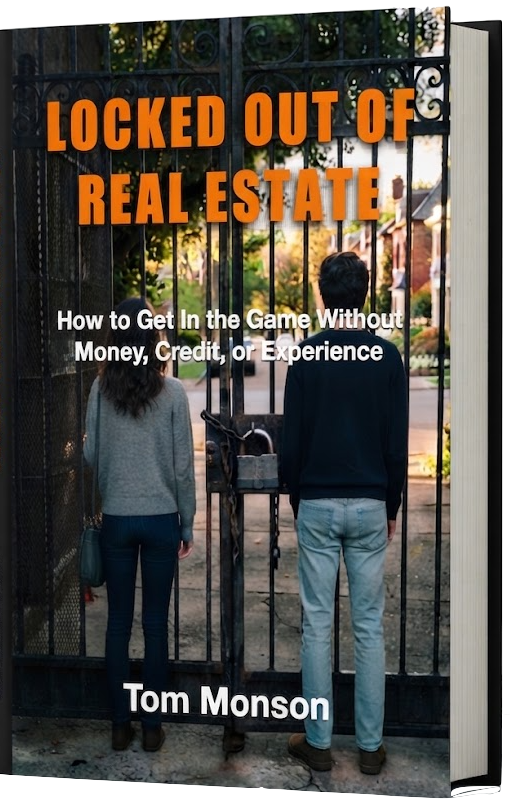
In Locked Out of Real Estate, I tell Roman’s story. Roman believed that real estate investing without money was possible, and I explain the principles he learned about finding opportunities, understanding sellers, evaluating deals, and thinking creatively about how real estate transactions can be put together.
You may not have all the money, credit, or experience you think you need.
That doesn’t mean you can’t start learning to think like a real estate investor today.
The bottom line is that real estate investing without money is possible.
Now Available on AMAZON

Related article: Become a Real Estate Investor