
How to Write a Screenplay
How to Write a Screenplay (And Why Saving Charity Nash Shows You How It’s Done), by Mark Rogers
Writing a screenplay is not just about putting a story on paper—it’s about crafting a cinematic experience that transports readers and audiences into another world. Screenplays are blueprints for movies, and mastering this medium requires a balance between structure, character development, and compelling storytelling.
If you’re looking for an example of how to write a screenplay that combines emotional depth with thrilling suspense, look no further than Saving Charity Nash by Tom Monson. This supernatural thriller is a masterclass in screenwriting, blending universal themes of guilt and redemption with the visual storytelling techniques that make screenplays so engaging.
In this article, we’ll break down the essential elements of how to write a screenplay, using Saving Charity Nash as our guide and comparing it to the greatest stories ever told.

Start with a Captivating Concept
The first rule of how to write a screenplay is to start with a strong concept. Your script needs a hook—a unique idea that grabs attention immediately. Saving Charity Nash does this brilliantly with its premise: “What if your greatest guilt became your greatest gift?”
This concept isn’t just intriguing; it’s universal. Everyone has experienced guilt, and the idea of transforming that guilt into something redemptive taps into a core human desire. By combining this relatable emotional journey with supernatural elements, Saving Charity Nash sets itself apart as a story that is both personal and extraordinary.
When crafting your own screenplay, ask yourself:
- What is the heart of my story?
- Can I summarize it in one compelling sentence?
- Does it have the emotional depth to resonate with an audience?
Great screenplays like The Sixth Sense and A Quiet Place succeed because their central concepts are both unique and emotionally charged. Saving Charity Nash follows in this tradition, proving that a strong hook is key to a screenplay’s success.
Build Relatable, Dynamic Characters
One of the most important lessons in how to write a screenplay is to focus on your characters. They are the soul of your story, and audiences need to connect with them on a personal level.
Charity Nash, the protagonist of Saving Charity Nash, is a shining example of a well-rounded, dynamic character. Haunted by the deaths of her younger brothers in a childhood fire, she carries the weight of guilt and self-doubt. Yet, her transformation throughout the story—from a broken woman to a courageous savior—is what makes her unforgettable.
When developing your characters, consider the following:
- Flaws Make Them Human: Charity’s guilt and self-doubt make her relatable, just like Rick Blaine’s bitterness in Casablanca or Bruce Wayne’s trauma in The Dark Knight.
- Growth Drives the Story: Charity evolves as she discovers her supernatural gift and uses it to save lives, proving that character arcs are essential to compelling storytelling.
- Choices Reveal Their Core: In Saving Charity Nash, Charity’s decisions to act on her visions—even when no one believes her—showcase her bravery and moral integrity.
Master the Screenplay Format
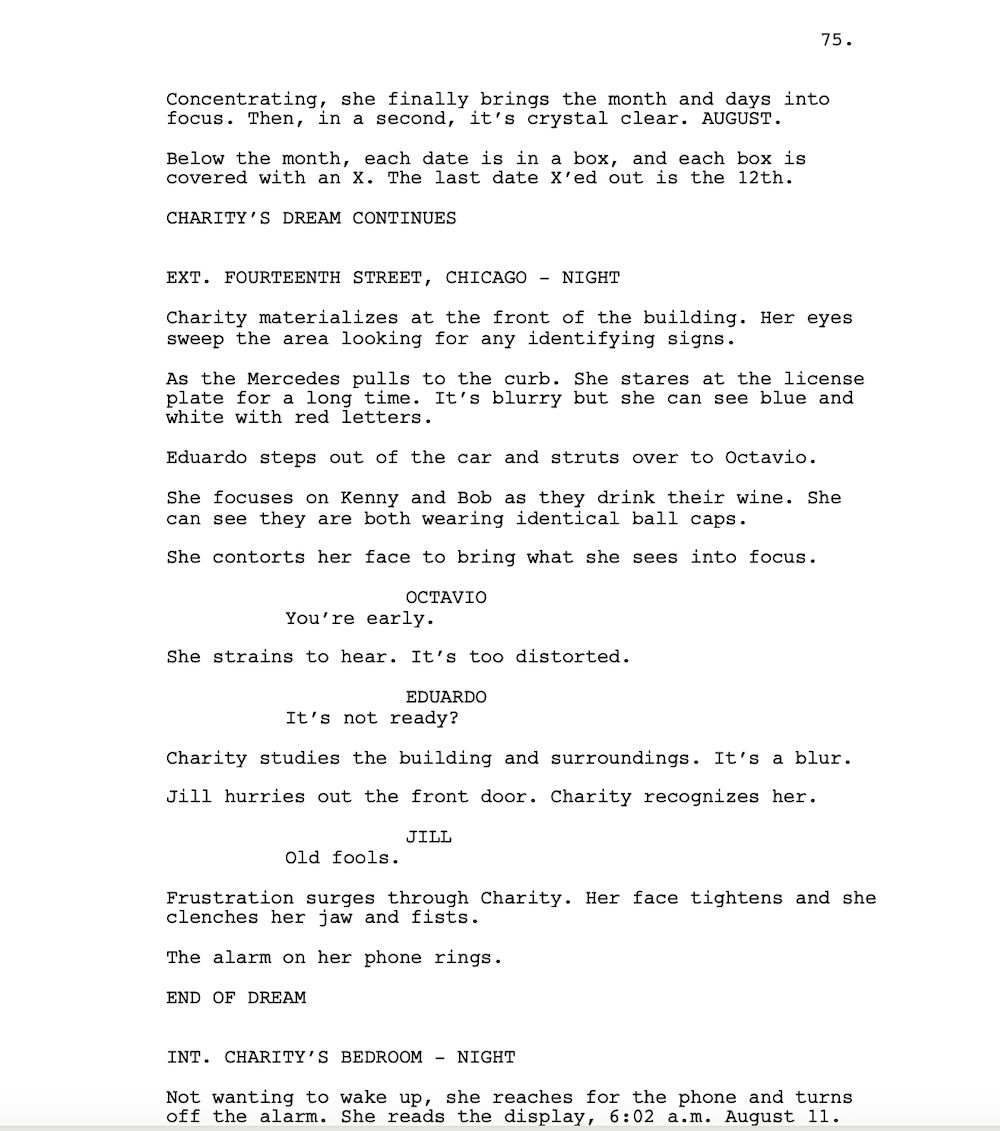
Understanding how to write a screenplay means mastering the format. Unlike novels, screenplays are written in a highly visual style, focusing on what can be seen and heard on screen. They are concise, present-tense blueprints designed for directors, actors, and production teams.
Here’s an example from Saving Charity Nash:
###
This scene captures the tension and urgency of the moment with vivid, visual storytelling. Notice how the descriptions are short and impactful, focusing only on what the audience needs to see and hear.
When writing your own screenplay, follow these tips:
- Use Sluglines: Clearly indicate where each scene takes place (e.g., INT. APARTMENT – NIGHT).
- Keep Descriptions Brief: Focus on actions, settings, and visuals. Avoid unnecessary backstory or internal thoughts.
- Write in Present Tense: Screenplays unfold in real-time, so use active language to keep the pacing tight.
To see how it’s done at the highest level, study screenplays like Saving Charity Nash or classics like Pulp Fiction and The Godfather.
Structure Your Story with Precision
If you want to know how to write a screenplay that works, you need to understand structure.
Most successful screenplays follow a three-act structure:
- Act One: Set-Up – Introduce the characters, the world, and the central conflict.
- Act Two: Confrontation – Raise the stakes and throw obstacles at your protagonist.
- Act Three: Resolution – Deliver a satisfying climax and tie up loose ends.
Saving Charity Nash follows this structure seamlessly. The first act introduces Charity’s backstory and her newfound visions. The second act escalates as she struggles to convince others of the impending fire and races to save the trapped children. The third act delivers an emotionally charged climax when Charity risks her life to rescue the children, finding redemption in the process.
This structure isn’t just a formula—it’s a roadmap that ensures your story stays focused and engaging. Films like Titanic and Star Wars prove that even the most epic stories thrive on a solid structure.
Infuse Your Story with Universal Themes
The best screenplays resonate because they explore themes that speak to the human condition. Saving Charity Nash is more than a supernatural thriller—it’s a story about guilt, redemption, and the power of resilience.
These themes elevate the screenplay, making it relatable and emotionally impactful. Charity’s journey reminds us that even in our darkest moments, we have the ability to rise above, take action, and find purpose.
When writing your screenplay, ask yourself:
- What deeper message does my story convey?
- How can I explore universal themes in a way that feels personal?
Compare this to timeless stories like The Shawshank Redemption, which explores hope and freedom, or It’s A Wonderful Life, which delves into purpose and community. These themes are what make stories memorable, and Saving Charity Nash follows in their footsteps.
Make It Personal
Finally, the most important lesson in how to write a screenplay is to make it personal. The best stories often come from a place of deep emotional truth.
Tom Monson drew inspiration for Saving Charity Nash from a real-life event—his mother’s premonition of a fire that tragically came true. This personal connection adds authenticity and emotional depth to the screenplay, making it resonate even more with audiences.
When crafting your own screenplay, think about the stories and experiences that have shaped you. What truths can you bring to your characters and plot?
Conclusion: Why Saving Charity Nash is a Screenwriting Masterpiece
If you want to learn how to write a screenplay, Saving Charity Nash is the perfect example to study. It combines a compelling concept, relatable characters, and universal themes with the precision of the screenplay format. By following its lead—and the techniques outlined above—you can create a story that captivates audiences and leaves a lasting impact.
So, grab your laptop, find your story, and start writing. Who knows? Your screenplay might just be the next great masterpiece.
Get the entire script in the new book Saving Charity Nash.
NOTE: Tom Monson has written and produced dozens of television shows, several feature films, and documentary films.